Workshop Overview
What messages do our learning spaces send—and how can we design environments that invite belonging, curiosity, and deep learning?
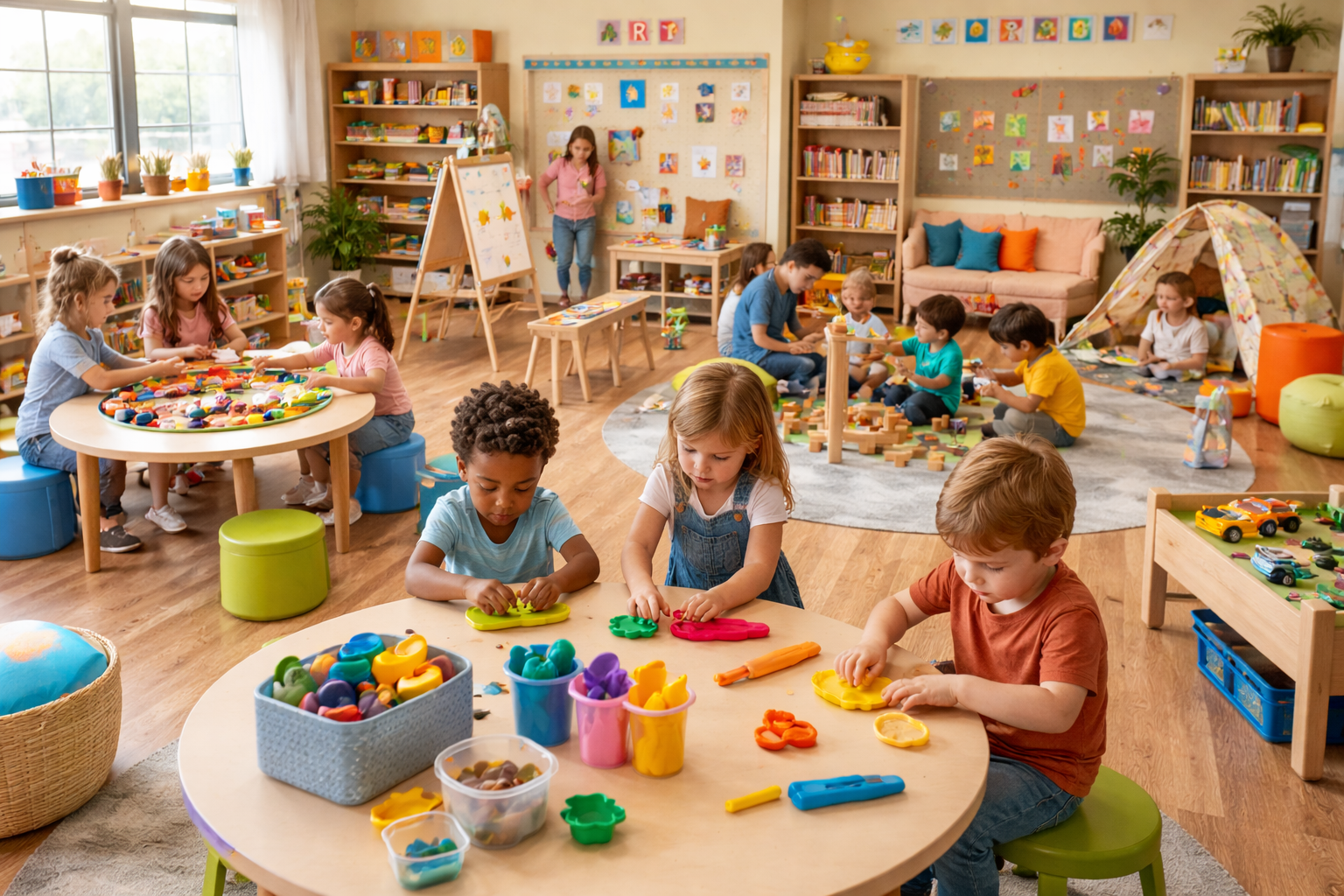
This three-session workshop supports educators in re-imagining classroom environments as active partners in learning rather than passive backdrops. Participants will explore how space, materials, organization, and display communicate values about children, learning, and community.
Through reflection, analysis, and practical design work, teachers will examine how intentional environments can support independence, engagement, identity, and inquiry across early years and primary contexts.
Across three sessions, participants will:
*Our workshops are based on the principles of ‘flipped classroom’ and are a combination of synchronous (live teaching through Zoom) learning and asynchronous (pre-reading and home learning) learning. Pre-reading and home learning in between sessions forms the basis of the live session where we explore the workshop material in depth through learning engagements and discussions.*
Online
Category:
Facilitator:

Kristi Budworth
Kristi Budworth brings over 30 years of experience in education, with a global perspective shaped by her leadership and classroom roles across international schools. She has led curriculum development through the IB PYP framework with a strong emphasis on play-based learning, inquiry, and conceptual understanding.Kristi’s work centers on designing dynamic, responsive curriculum with expertise in emergent curriculum, transdisciplinary planning, and structured literacy grounded in the Science of Reading. A passionate advocate for both the art and science of teaching, Kristi’s areas of specialization include play-based pedagogy, early years leadership, concept-driven curriculum, and coaching new educators. She also facilitates learning on student agency, oracy, and developing future-ready skills through slow and emergent curriculum design.